
2025–2035 Plan
The Future of the Zoo
A 10-year transformation plan: ten new immersive areas, organized by continent.
A Decade-Long Vision
Ten new areas, one goal
The images below are concept drawings of the project: they are intended to show what the zoo might look like in the future; they do not depict areas that have already been completed. Construction has not yet begun, and work will proceed one area at a time, as funds allow.
Between 2025 and 2035, Zoo al Maglio will undergo a complete transformation. This will not be a single project, but a comprehensive plan that will redesign every area of the zoo: immersive environments, spaces tailored to the needs of each species, and trails designed for the families who visit.
The goal is simple yet ambitious: to transform the visit into a journey of discovery, where visitors walk right into the animals’ environment rather than observing it from the outside. Ten new immersive areas, organized by continent.
Continent · East
Australia and Asia
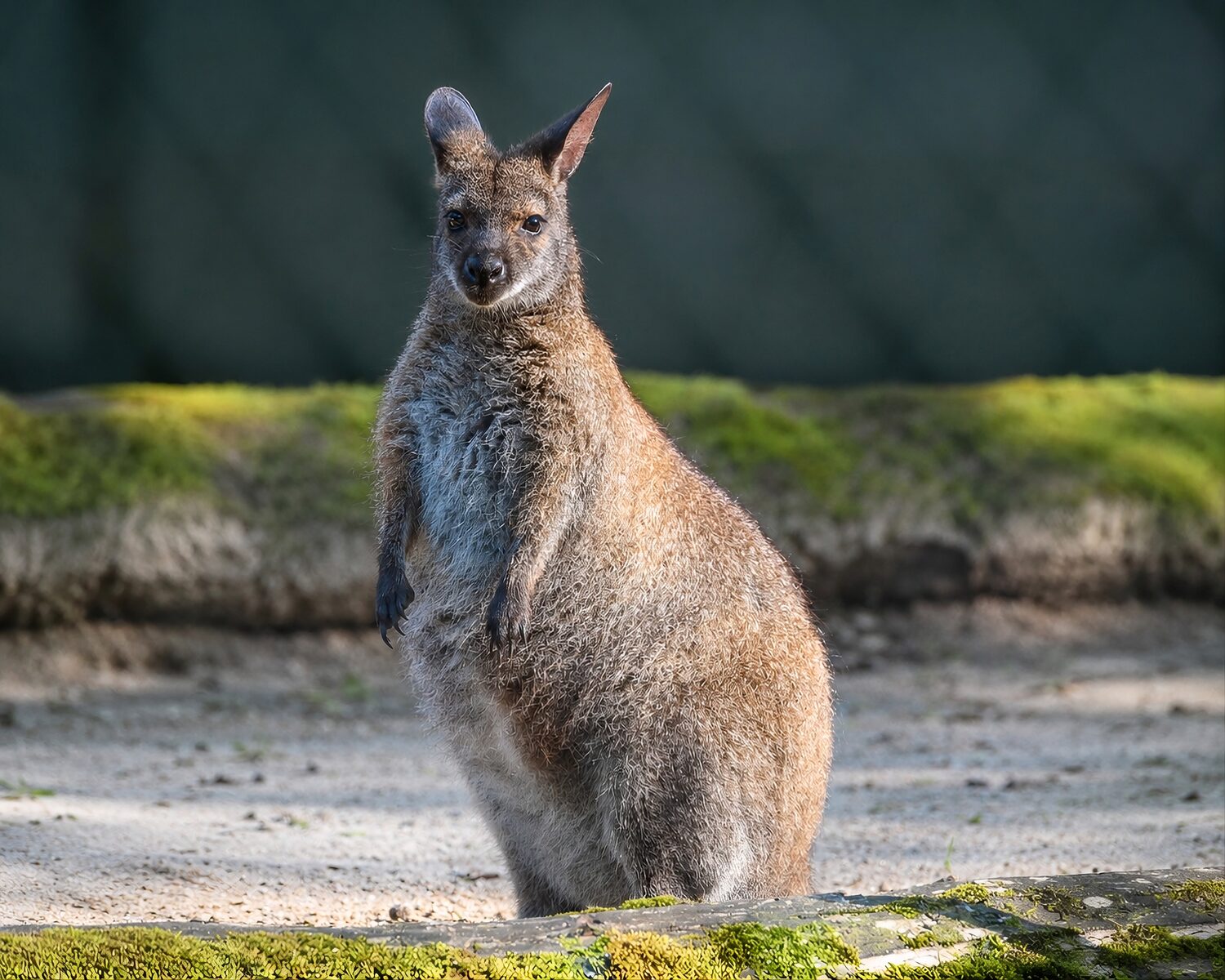
The Australian Trails
In the current wallaby area. A guided loop trail will take visitors through the area, featuring three observation points: a panoramic view at the entrance where visitors can feed the wallabies and fallow deer directly; an elevated terrace that creates the illusion of standing on the edge of an eastern Australian forest; and finally, the entrance to the aviary, where pink cockatoos and rainbow parakeets will fly around visitors, who will be able to feed them by hand.
The Gibbon Forest
In the current, expanded gibbon enclosure. An artificial cave will run through the area and lead visitors to an elevated hut in the center of the enclosure. From there, through glass walls on three sides, visitors will be able to observe the white-handed gibbons swinging through the trees in a 360-degree view, at the same height as the visitors. A second observation point—a large glass window facing the lake—will allow visitors to see the gibbons moving overhead. A female gibbon is also expected to arrive to help form a stable pair as part of the EEP program.
The Asian Forest
In the current pond area. A path that winds through the area both inside and outside, with a central bridge over the pond. A total of four observation points will allow visitors to see small-clawed Asian otters swimming in the pond, ducks walking among the visitors, and porcupines moving through the undergrowth.
Project Design
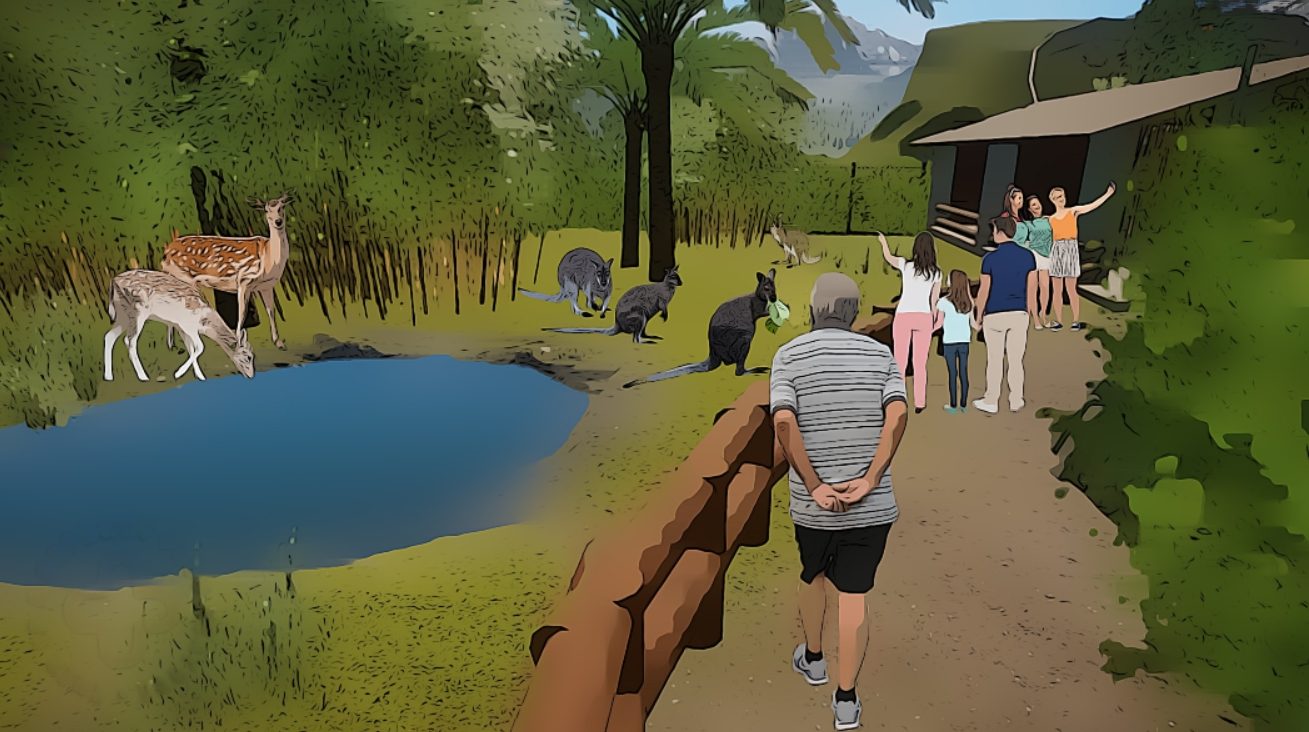
The Australian Trails, as envisioned by the project: the circular trail among the wallabies and fallow deer.
Continent · New World
The Americas
American Waterways
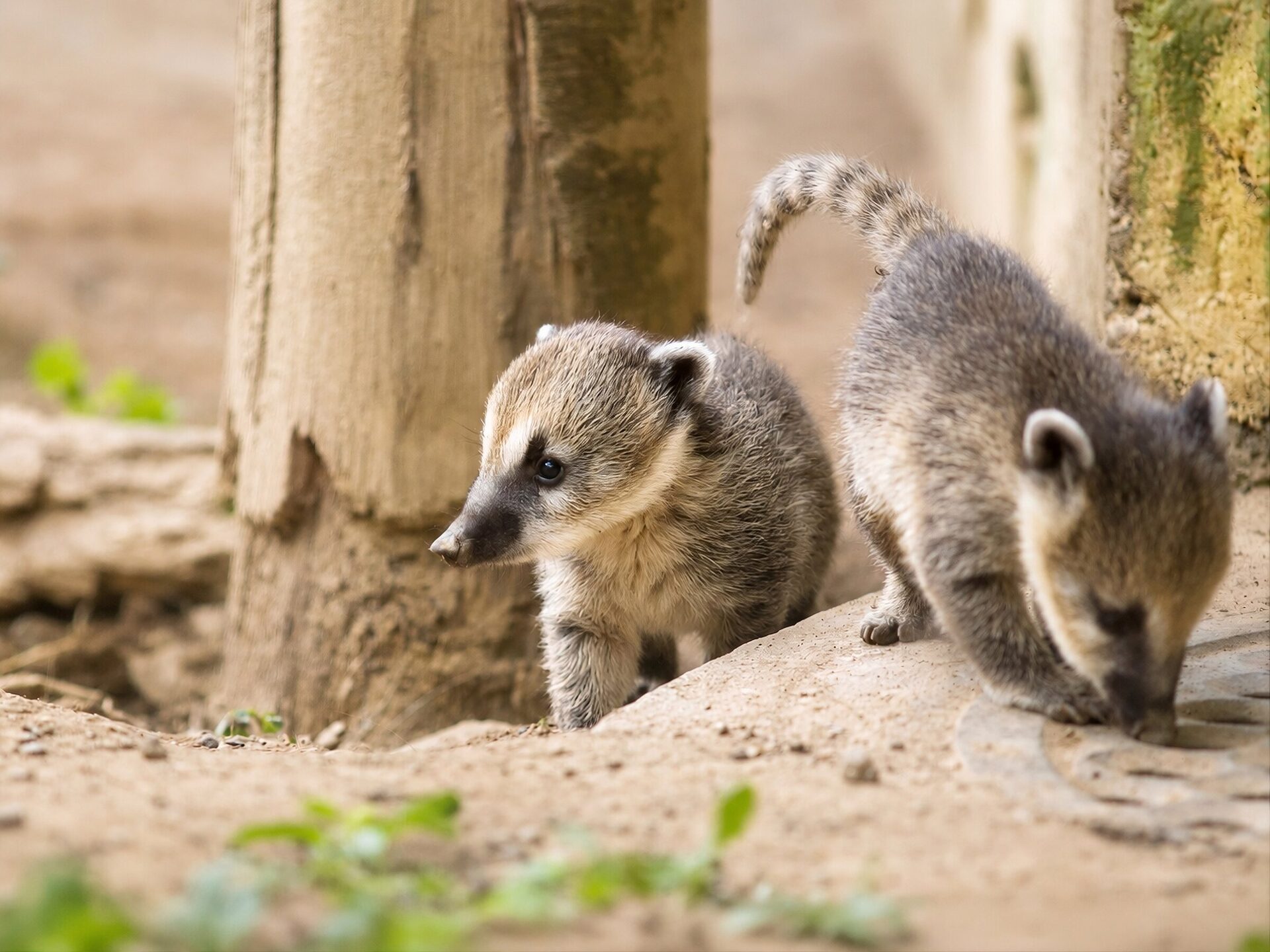
In the current cebi and nasua area, which has been consolidated into a single large space. There are two observation points: one with streams and ponds where visitors can watch the raccoons interact with the water, digging and searching for food; and a drier area where they can be seen climbing the shrubs. At both points, visitors can feed the raccoons directly through mesh panels built into the fences.
The Amazon Rainforest
Among the current parrot and owl enclosures. This area consists of three separate enclosures, connected by a trail with seven observation points. Visitors will enter the parrot aviary and see the parrots flying overhead; they will be able to observe the ceebs through two large glass windows; and they will be able to hand-feed the coatis and feed the ceebs at the sixth observation point. The same area will also be home to the rare burrowing owls.
The Sloth’s Terrace
The new home for the sloth and the armadillo. An area of over 50 square meters, landscaped with ropes, bamboo logs, and elevated platforms. A covered, heated shelter ensures the animals have a suitable environment even during the cold months. For the armadillo, a soil substrate will be provided, allowing it to dig, just as it does in the wild.
Project Design
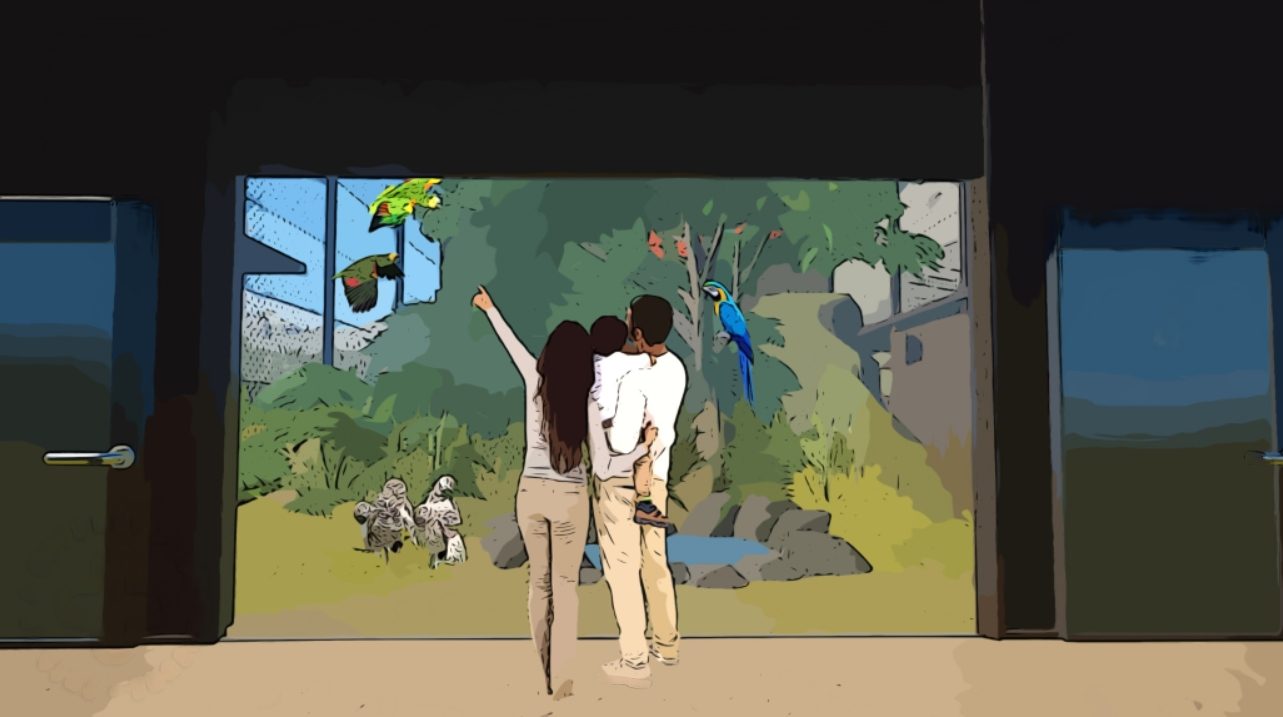
The Amazon Rainforest: As you enter the aviary, parrots fly overhead.
Continent · Savanna
Africa
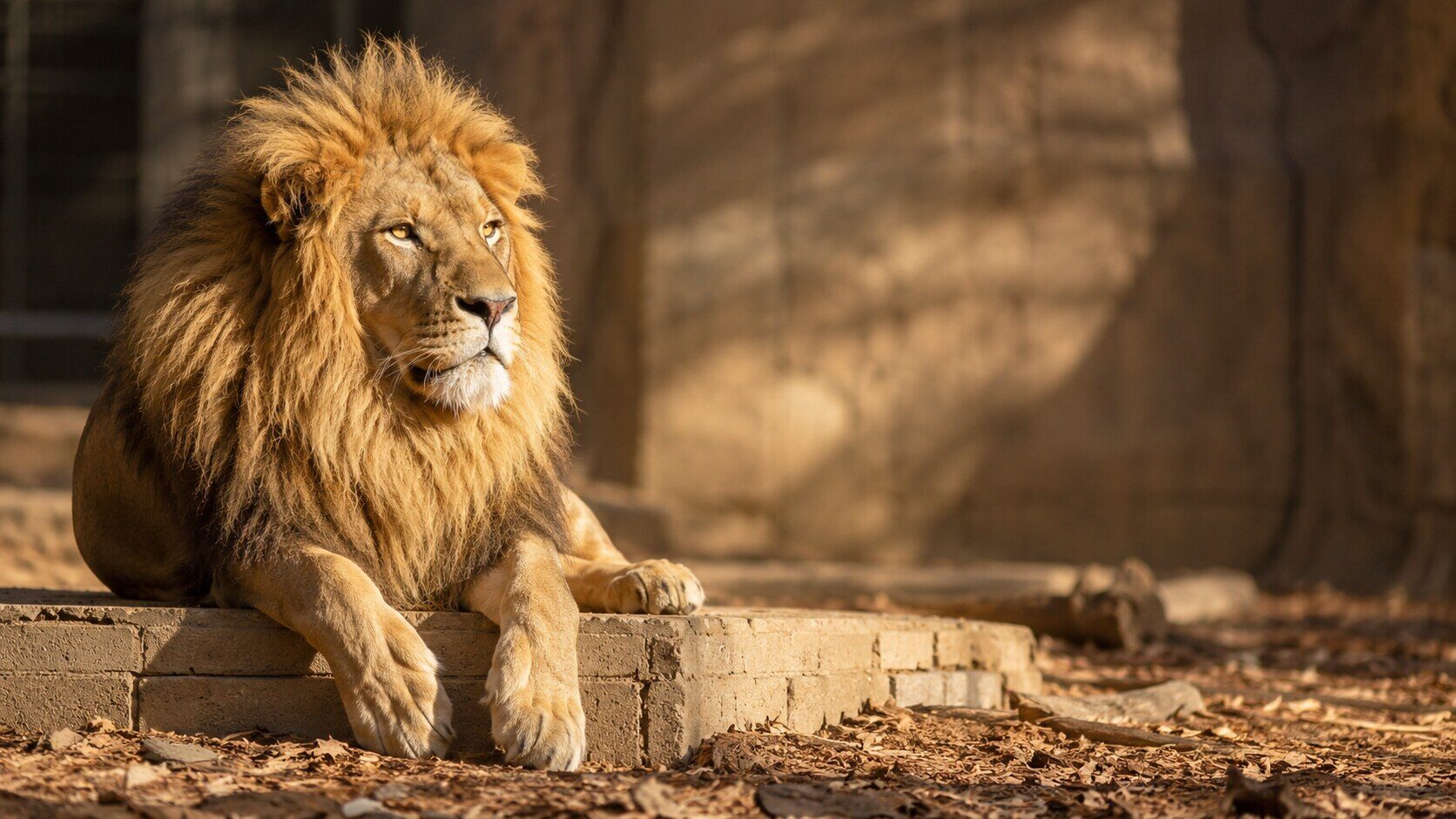
The Cave of the Lions
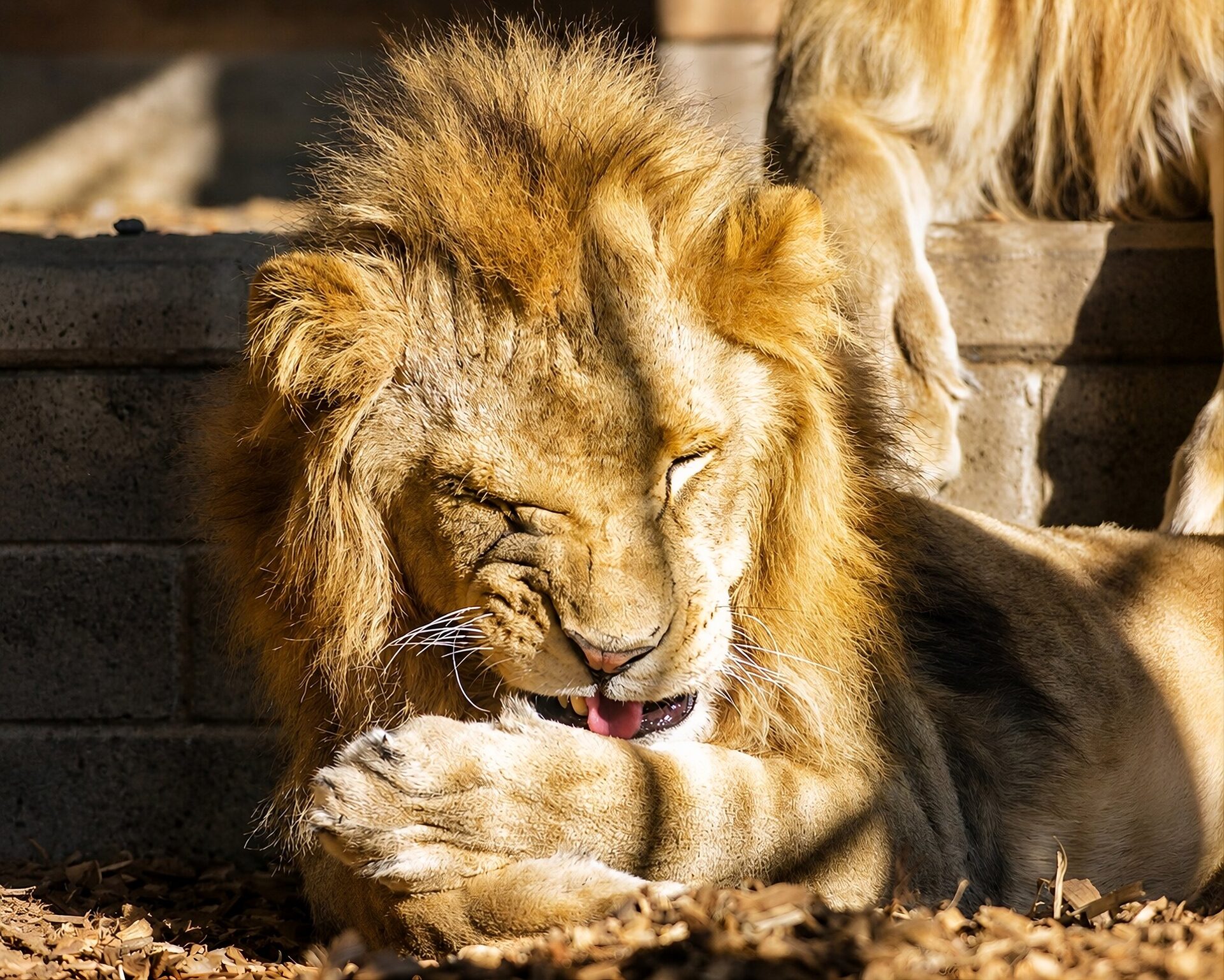
The most ambitious project in the plan. A complete renovation of the lion enclosure, including the construction of a cave accessible to the public that extends into the enclosure. Visitors will be able to observe the lions from below through glass panels, while the lions walk above their heads on elevated platforms. An elevated viewing platform will serve as the first observation point, from which visitors will see the lions face-to-face through glass panels. The exhibit will also feature educational materials on the threats lions face in the wild: habitat loss, conflicts with local communities, and poaching.
The Forests of Madagascar
The new home of the ring-tailed lemurs. An immersive experience that faithfully recreates the dry forests of Madagascar, featuring structured vegetation, tree trunks, elevated areas, and natural spaces. Visitors will walk through the same environment where the lemurs roam. There are two observation areas: a desert forest and a tropical forest, separated by an open space. The lemurs will be able to move freely between the two forests, and visitors will be able to observe them up close or watch them leap over their heads.
The Little Giants of Africa
A new area dedicated to African insects and mollusks. Three or four adjacent display cases will house giant snails, giant centipedes, and other little-known but fascinating species, viewable from three sides. A revelation for anyone who never imagined that insects and mollusks could be so surprising.
The Meerkat Den
Adjacent to the new Grotta dei Leoni. An area where meerkats will have space to dig, explore, and display their typical social behaviors. The aviary will also house African grey parrots and lovebirds, which will live alongside the meerkats, creating a small, integrated ecosystem.
Project Design
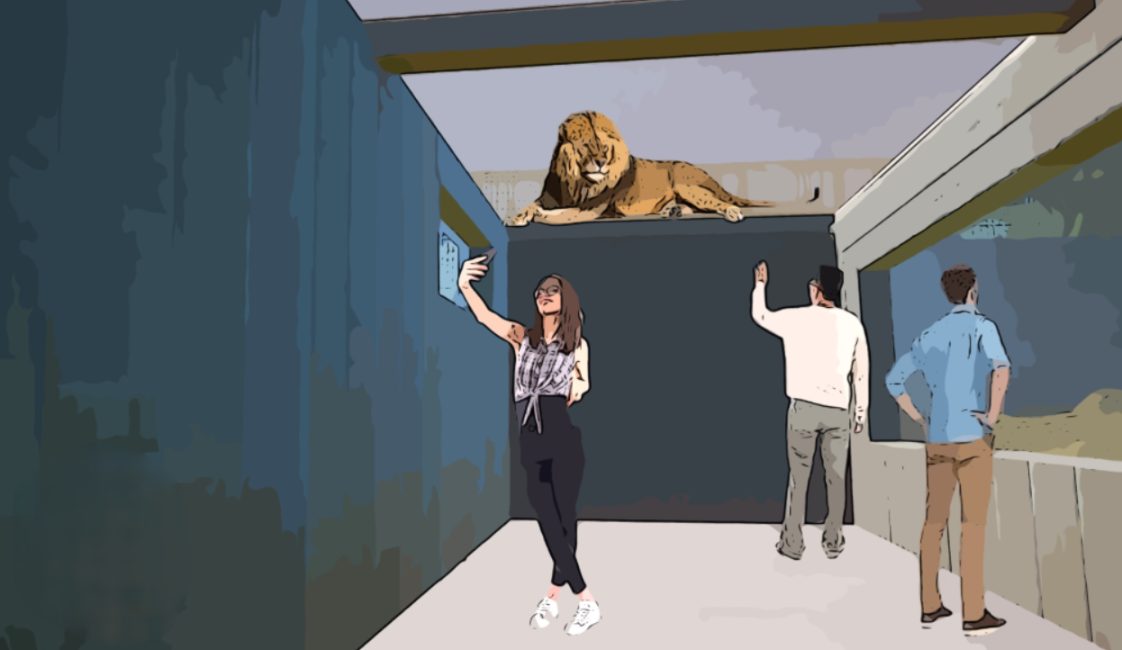
The Cave of the Lions: Visitors look up from below, while the lions walk above their heads.
Three Worlds on the Farm
Farms of the World
In Contact with Animals
Three Continents on the Farm
Three themed farms dedicated to farm animals from three different continents.
Northern European Farm
Inspired by Scottish farms, where wild and domestic animals will mingle around a lake with a beach, offering the chance to participate in a seal encounter.
African Farm
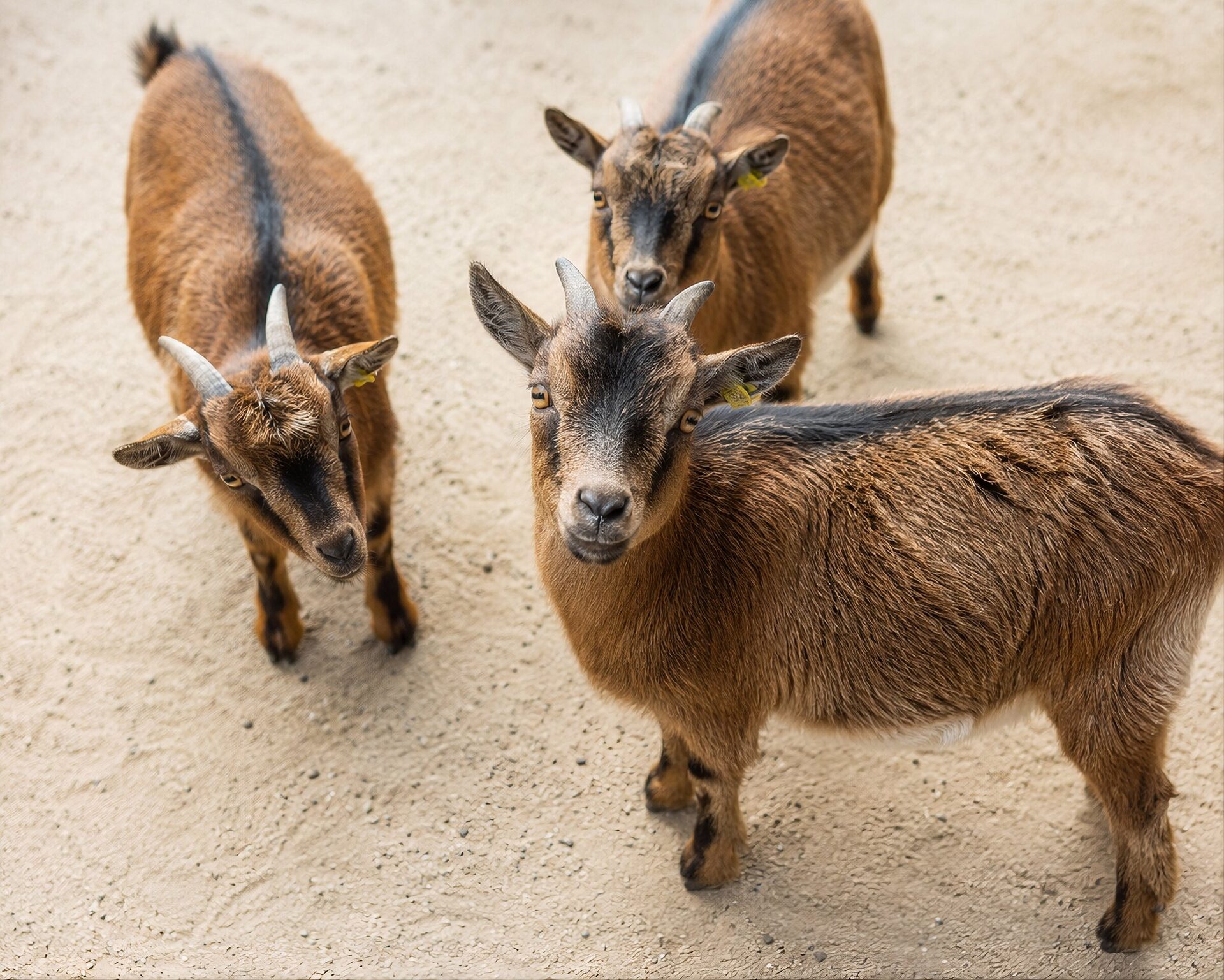
There, visitors can feed and pet the African pygmy goats and participate in the experience with the sulcata tortoise.
Asian Farm
Inspired by the coexistence between people and pets typical of the Asian countryside, featuring direct interaction with Vietnamese pigs.
Project Design
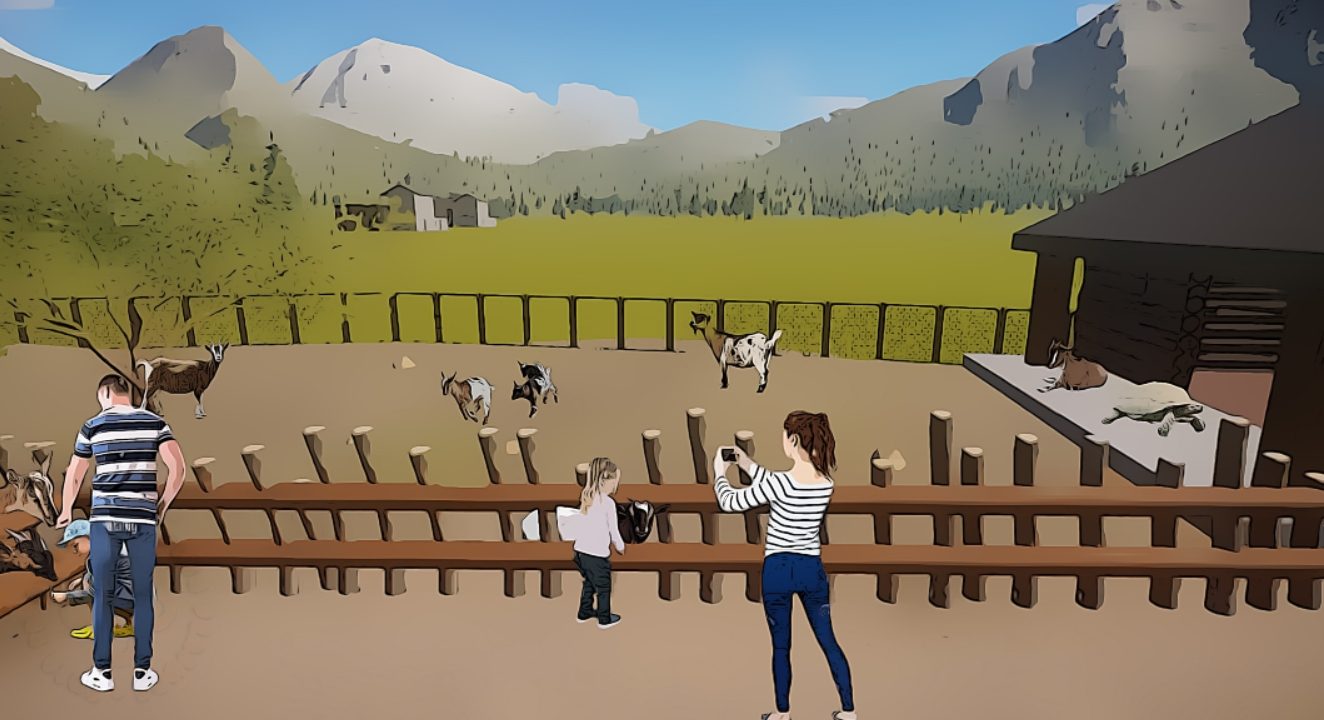
Farms of the World: Farm Animals from Three Continents, Right at Your Fingertips.
Support the plan
The 2025–2035 plan is ambitious and will be implemented step by step, thanks to the support of donors, companies, and individuals who believe in this project.